Dispatch # 1
All the Marlowe News and Debate That is fit to Pixelate
Welcome to the first issue of the new Marlowe Society Monthly Dispatch.
As the title suggests, we are planning to make this a monthly publication full of news, reviews and articles on all things Marlowe. We will also take a look around at the doings of several other organizations whose interests compliment ours.
Contents:
Opening Thoughts from the Chair
Peter Hutton’s Report on the Shakespeare Authorship Trust Annual Gathering
Carol Paxton’s Review of Dark Renaissance by Stephen Greenblatt
Closing Thoughts from the Editor
Opening Thoughts from the Chair
Christopher Carr, Professor Emeritus University of Edinburgh and Chair of the Marlowe Society
As we go to press, there has never been a year with so many Marlovian projects just about to hit the public. As Chairman, indeed, I have been privileged to review advanced manuscripts going out to book publishers and have been astonished at some of the findings and the quality of evidence.
Ever since the (2016) New Oxford Shakespeare finally attributing Marlowe as probably the major author of Henry VI, Parts 1, 2 and 3, in conjectured collaboration with then unknown William Shakespeare, popular interest began to take off. Many of our members enjoyed Born With Teeth at the Wyndham, exploring any such potential collaboration. Others similarly enjoyed Val McDermid’s Midnight New Comes, another take on the same theme also this summer.
As Professor Greenblatt put it in his Dark Renaissance (reviewed below), there has been no more exciting author than Marlowe himself. “In the 1990s the screenwriter Marc Norman came to see me on several occasions to solicit my ideas for a biopic based on the life of Shakespeare. I repeatedly told him to forget Shakespeare and write a movie instead about Christopher Marlowe”. (DR, 287)
What we at the Marlowe Society are pleased to recognize is that such new talents are not just from Britain but come equally from the USA and Canada, and potentially even further afield. This may mean that more of our events will be inevitably be online, perhaps even taking place overseas and also in some cases in collaborations with others such as the Shakespeare Authorship Trust. With well over a hundred Shakespearean conferences a year in almost as many countries, the challenge may be to get our exciting new research out there, to spur interest in Marlowe and hopefully extend our membership.
Nevertheless, many of our traditional membership has been more local, especially in Marlowe’s home city of Canterbury. We are therefore currently talking to the Beany Museum in the High Street about their forthcoming exhibition between July and November, where they will be hosting our Society’s own original two Holinshed Manuscripts – acknowledged as sources for many Marlovian and Shakespearean historical plays. Currently these are on loan to Kent University’s Archives. What we would love to do is to offer some complementary lectures, topping and tailing this exhibition firstly in July and secondly in October or November coinciding with the Canterbury Festival – and of course in conjunction with the Langton School, hosting our new Marlowe library. Again, watch this space for our next Dispatch next month.
Meanwhile thank you to our committee, and all our members, for your support in what has been quite a difficult year, and to Peter Hodges for taking on the position of Acting Secretary, as we look forward to a truly exiting 2026!
Shakespeare Authorship Trust Annual Gathering
Reported by Peter Hutton
Those who made the effort to head up to north London on November 16th for the annual gathering of the Shakespeare Authorship Trust were in for a real treat. The intimate Marylebone Theatre was the ideal setting for those with a real interest in the authorship question. It attracted approaching 200 people from a wide range of backgrounds – accomplished writers and actors, students, academics, those committed to one or other of the main authorship contenders - perhaps the Earl of Oxford more than any other – and those new to the subject and intrigued to listen to the evidence and arguments to formulate their own views. Conversation before the event and between sessions was lively and gave those with allegiance to one narrative the chance to pitch this against those with an alternative view.
Although turnout from Marlowe Society members was small, scheduling of Dr Marie Jenson and Lars Holger Holm to fill a last-minute drop-out slot, gave an unexpected and extraordinary evidential boost to the Marlowe case. Well done to our chairman, Chris Carr, for spotting and grabbing the opportunity and arranging for them to fly in for the event!
This was the first time I had attended one of these gatherings and was delighted that it was open to non-members. Many attendees formed groups afterwards to enjoy a drink and maybe a meal to exchange experiences and enrich their knowledge. Where else could one enjoy a few beers and a meal with an accomplished lifetime Shakespearean actor, a visiting American student doing research for their doctorate, and the stand-in speakers Marie and Lars available to sign copies of their recently published book.
The proceedings were introduced by Professor William Leahy, Professor in Shakespeare Studies University of Limerick, Ireland, and Shakespeare Authorship Trust trustee. He gave us an encouraging overview of how attitudes towards the authorship question have been changing over the last 20 years or so. He noted that 15 years ago it was very difficult to get anything published that challenged the Shakespeare orthodoxy. Now the climate is very different.
Prof. Leahy highlighted two significant moments over the last 20 years. One was in 2007 with Mark Rylance writing and performing ‘I am Shakespeare’, followed by his launching, with Derek Jacobi, the Declaration of Reasonable Doubt. The second was James Shapiro’s ‘Contested Will: Who wrote Shakespeare?’ published in 2011. Although this comes down on the side of the Stratfordians, he noted it helped to move the authorship question into the mainstream. Other important milestones included Diana Price’s ‘Shakespeare’s Unorthodox Biography’ published in 2000 which concluded that Shakespeare was not the author of the works attributed to him. Then, In 2011 the film ‘Anonymous’ built around the case for the Earl of Oxford raised many questions (though having just watched it, it seems to run fast and loose with a number of known historical facts, like Marlowe being around the theatre scene in London after 1593 and apparently dying in a street brawl in London).
Increasingly, textual analyses have suggested that many of the works could have been collaborative efforts and the 2016 ‘New Oxford Shakespeare’ suggested that at least 12 plays were multi-authored, but none had no Shakespeare involvement at all.
Added to that you can now get an MA on the authorship question. Meanwhile, The Shakespeare Birthplace Trust, once the bastion of defence for those committed to Shakespeare’s authorship, has declined in recent years as the doubters’ case has gained momentum and the diehard Stratfordians have been replaced by a younger generation more open to heretical ideas. Prof. Leahy closed by noting that two recent books have done much to move the debate forward. Elizabeth Winkler’s ‘Shakespeare was Woman, and Other Heresies’ published in 2024 and Jodi Picoult’s ‘By Any Other Name’ 2025 (see below).
This was followed by a video of Ros Barber interviewing Jodi Picoult about her recent book, ‘By Any Other Name’.
Jodi was inspired to look into the authorship question after reading an article by Elizabeth Wilnkler some years ago; in particular the idea that Shakespeare had two daughters, neither of whom could read or write, and yet his plays contain many quite complex female characters, not least Emilia in Othello. How did the author come to be so sensitive to a woman’s point of view? There were at that time a number of accomplished female writers, even though women were not allowed to perform on stage. Leading among these was including Aamelia Bassano, the first female to publish a book of poems in 1611.
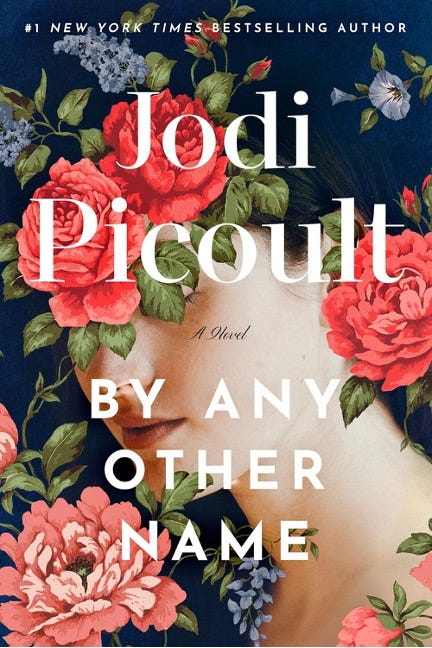
In her book, Jodi put forward the idea that Aemilia Bassano co-authored a number of ‘Shakespeare’ plays and possibly sonnets. She buys into the idea that the Earl of Oxford was probably the ringleader of a group of writers and that this core group wrote most of the plays. Shakespeare perhaps had a brokering role, and he had the power to put his name on the works. As evidence she notes that when plays started to be published as literature, Hemworth’s records show payments made to five writers for one play, but it was sold with only one name on it.
The annual gathering finished with a most intriguing tale from Dr Marie Jenson and Lars Holger Holm. If we are to believe Marie’s story – and she seems very genuine to me - this could transform the authorship debate in favour of Marlowe. In 1982, Marie, as a young graduate student, was given access to the Vatican archives in Pauda to carry out research for her PhD, possibly the first woman ever to do so. She ordered a particular manuscript but was mistakenly brought a different one written in the 11th century in medieval Latin. When she read this, it appeared to contain forbidden works considered unsuitable for the public. Most strikingly they contained the stories that provided the basis for several of ‘Shakespeare’s plays, including Romeo and Juliet, The Merchant of Venice, and Much Ado About Nothing.
If one accepts the narrative that Marlowe did not die in a brawl in Deptford in1593 but was banished to the continent, then many things point to Marlowe could well have ended up in Padua and been able to gain access to, and read, the manuscripts that carry the plots of a number of ‘Shakespeare’ plays. Unlike Shakespeare, he could read Latin, was fluent in various languages, including Italian, is known to have travelled abroad as part of Francis Walsingham’s spy network – Marie remembers seeing a picture of Walsingham in Padua. Marlowe studied theology at Cambridge and visited the Catholic seminary in Flushing as a spy and as an actor/playwright. One can see how he could have fitted in to a Catholic environment and, perhaps with the help of the English Ambassador in the Vatican, gained access to the archives.
Excited, Marie returned to her tutor and asked if she could change the subject of her PhD. After some moments reflection, he declined suggesting it would be too controversial.
Years later, and intrigued by the Marlowe story, she joined up with leading Swedish author Lars Holger Holm, who turned her experience into a Da Vinci Code type thriller, ‘Dark as Night’, published 2025.
DARK AS NIGHT, A novel about Shakespeare, Marlowe, and the secret that changed everything, by Lars Holger Holm and Marie Jansen, dives into a world of intrigue, espionage, and forbidden knowledge, where the truth about England’s greatest writers lies hidden beneath layers of deception.
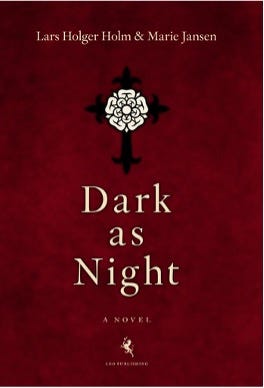
The story kicks off in May 1982, when Beatrice Algheri – a young Latinist from Cambridge University doing research work in the Vatican manuscript reading room – by coincidence lays her hands on an officially unknown 11th century manuscript: De Gestis Romanorum (The Deeds of the Romans). Together with an unexpected companion, the Iranian diplomat Fahrad Ghazeli, she feels compelled to undertake a journey which initially leads them to Padua, secretly guided there by Wolfgang Heiden, a German Professor of Oriental languages. Here the haunting hunch grows into a quest for a truth so astounding that it could potentially rock the entire Shakespearean scholar community to its core. At the heart of the mystery: who wrote the plays and what was Marlowe´s true fate? Was William Shakespeare a genius author or just a figurehead? Why did the School of Night – a circle of radical thinkers challenging the world’s deepest truths – decide to realise their ambitious plan? And how far would the nations go to protect its secrets?
About the authors:
Lars Holger Holm is a renowned violinist and prolific author. In this capacity, he has also been active as a versatile cultural analyst, music critic, columnist for Sweden´s Financial Newspaper and radio host at Classic FM. He is a distinguished musician and the author of more than 20 books published in English and Swedish, having translated seminal works by luminaries like Charles Baudelaire, Friedrich Nietzche and Oswald Spengler into his native tongue.
Marie Jansen is a Swedish Norwegian scholar of Anglo-Saxon and Latin. She is an award-winning author of books written in Italian and a simultaneous interpreter. She lives in Rome, where she continues to dedicate herself to the extensive and intensive study of its long legendary history.
It would be great if we could find someone who could verify what Maria tells us she found and was able to publish it! Anyone know the Pope?
The Marlowe Papers Onstage
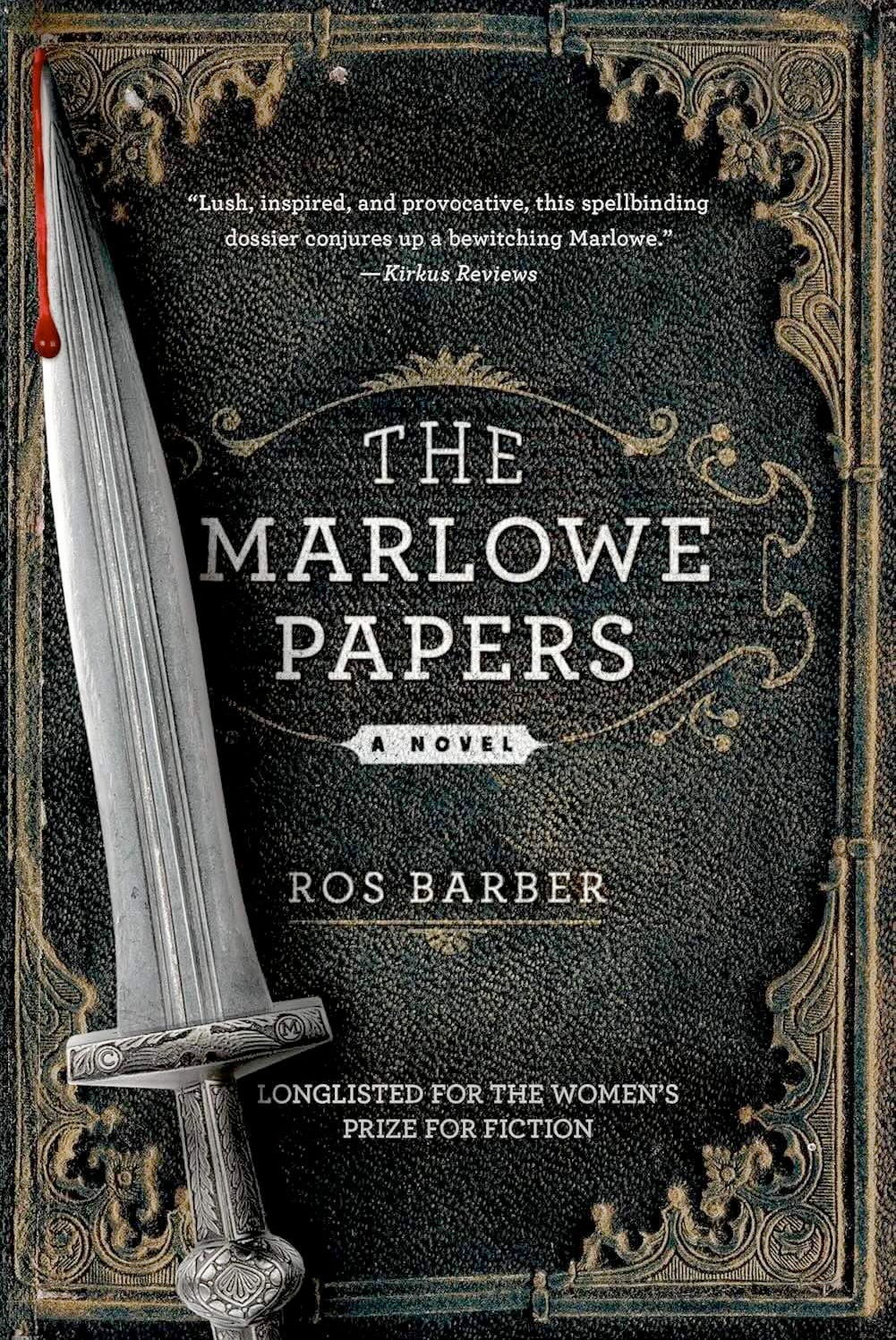
Those who signed up for the afternoon session would have enjoyed the remarkable presentation by actor Jamie Martin
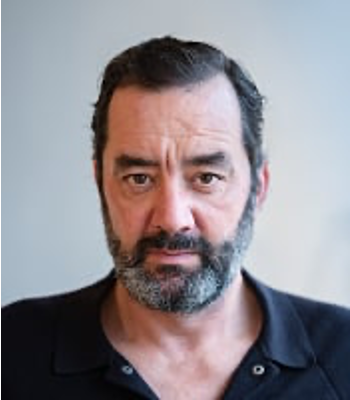
performing Ros Barber’s one-man play based on her book ‘The Marlowe Papers’. Marlowe Society members would have had the advantage of being familiar with the Marlowe narrative as the actor switched eloquently from one role to another with corresponding accents and staging.
A masterpiece!
Book Review:
Dark Renaissance by Stephen Greenblatt
Review by Carol Paxton
There are not many full-length biographies of Christopher Marlowe. In the 80+ years since the publication of John Bakeless’s influential biography[i], long out of print but available second-hand[ii], the average year has seen more new Shakespeare biographies published than the sum total for Marlowe. Therefore, the publication of a new biography by prominent scholar Professor Stephen Greenblatt is in itself an event to be welcomed, giving Marlowe’s name much-needed visibility online and in the arts pages and book reviews.
The book itself is an easy, pleasant read, accessible to the non-specialist – both its strength and the reason I was ultimately disappointed with it. I expected the book to finish with Marlowe’s “sudden and fearful end”[iii] in 1593, but I also hoped for a significant contribution to Marlowe’s biography. However, it is based on secondary sources, has little or no original analysis or insight, and contains far too many errors, omissions and speculations.
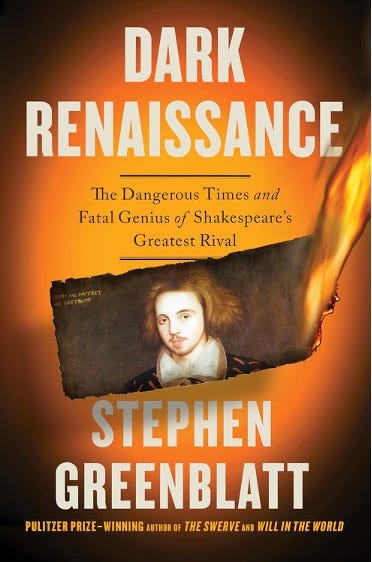
I can forgive the subtitle – The Dangerous Times and Fatal Genius of Shakespeare’s Greatest Rival, Christopher Marlowe. Although it is clickbait that plays into the popular image of Marlowe the rash boy, publishers need to sell books. However, the lack of attention to documented detail is inexcusable, a particularly egregious example being:
“Possibly Marlowe’s presence in the Netherlands had nothing to do with government service. He might have had some other trick up his sleeve and gone to the English garrison camp entirely on his own initiative. But it is far more likely that in 1591 he was assigned to do something for Walsingham.“[iv] Meanwhile, Sir Francis Walsingham died in 1590!
The Corkine incident[v] is relegated to the notes and omits Cynthia Morgan’s recent discovery in the Canterbury archives[vi] that Corkine, not Marlowe, was the aggressor. Corkine’s son wrote a well-known musical arrangement for Come Live With Me[vii] – hardly congruent with the account of Marlowe attacking unprovoked, although I suppose you could construe it as an act of rebellion against his father. Moreover, the examples of works inspired by this famous lyric[viii] exclude the version sung by Sir Hugh Evans in The Merry Wives of Windsor[ix], a curious combination with Psalm 137 – a song, one might say the song, of exile.
To shallow rivers, to whose falls
Melodious birds sings madrigals;
There will we make our peds of roses,
And a thousand fragrant posies.
To shallow—
Mercy on me! I have a great dispositions to cry.
Melodious birds sing madrigals—
When as I sat in Pabylon—
And a thousand vagram posies.
To shallow &c.
The translation of Lucan’s Pharsalia[x], of which only the first book survives, is not mentioned anywhere. The Ovid translation[xi] is covered[xii], albeit without any mention of the numerous traces to be found in Marlowe’s work and the Shakespeare cannon[xiii]. Here, it is [mis]used to speculate about Marlowe’s assumed homosexuality, but the use of a couplet from Elegy 15 as the epigraph to Venus and Adonis is not mentioned:
Vilia miretur vulgus; mihi flavus Apollo Pocula Castalia plena ministret aqua.
In Marlowe’s translation, including the final six lines:
Let base-conceited wits admire vile things, Fair Phoebus lead me to the Muses’ springs. About my head be quivering myrtle wound, And in sad lovers’ heads let me be found. The living, not the dead, can envy bite, For after death all men receive their right: Then though death rakes my bones in funeral fire, I’ll live, and as he pulls me down, mount higher.
There is more, much more, that goes unmentioned – The Faustus epigrams, Arbella Stuart, Harvey’s Gorgon, to name a few – but it serves no purpose to continue.
Turning from the life to the works, all seven canonical plays are discussed in varying levels of detail. Dr Faustus receives the most attention, in part as Marlowe’s best and best-known work, and in part because Greenblatt reads it autobiographically.
“Marlowe seems present, body and soul, in this scene, as if he has penned it with his own blood.“[xiv]
This is a serious book and Greenblatt is not asserting that Marlowe was actually a student of magic – a popular fictional trope – but that, like Faustus, he sold his soul to gain earthly advantage. In Marlowe’s case, the diabolical pact was with Walshingham and the Cecils, and it eventually destroyed him. It is an interesting idea, and there certainly is a long association of writers who both worked for and had an ambiguous relationship with the secret services, from Marlowe himself through to Grahame Greene[xv] and John Le Carre.
Marlowe’s contribution to the Henry VI plays is discussed, albeit as a minor contributor working with Shakespeare, but no mention is made of his possible authorship of/contribution to other plays often linked to Shakespeare, such as Arden of Faversham, The Taming of a Shrew or Edward III. Neither does Greenblatt venture any opinion as to what Marlowe and Kyd may have been writing when they shared a room.
Greenblatt has written extensively about Shakespeare, so it is no surprise that there is plenty of speculation regarding his relationship to/with Marlowe. It is not original – in fact, it is what almost every Shakespeare scholar and writer of fiction says, as brilliantly staged by the late Tom Stoppard in Shakespeare in Love[xvi].
“But that parody (pampered jades in Henry IV, Part II) came late, when Marlowe was dead and Shakespeare reigned as England’s leading dramatist. In Shakespeare’s early career, Marlowe had clearly served as what one scholar called a ‘provocative agent’. Marlowe’s The Jew of Malta was answered by Shakespeare with The Merchant of Venice; Edward II with Richard II; Hero and Leander with Venus and Adonis. It would not be accurate to say that Shakespeare’s responses were more conventional or cautious – his engagements with Marlowe’s achievements are brilliant, broodingly complex, and radical – but they are in every instance more self-protective. They represent a deep, ongoing conversation with Marlowe, one mingling together admiration and disagreement. But they never once signal trust.“[xvii]
It is a convenient explanation for the undeniable influence – at a minimum – of Marlowe on Shakespeare, but one for which there is no evidence outside the works themselves. This is, however, a slippery slope, as J.M. Robertson[xviii] found when pursuing this line 90+ years ago – the break between Marlowe and Shakespeare becomes less and less clear the closer you look. Perhaps Ted Hughes was right:
“The way to really develop as a writer is to make yourself a political outcast, so that you have to live in secret. This is how Marlowe developed into Shakespeare.”[xix]
Multiple authors, most notably Charles Nicholls[xx], have tried to make sense of the events of 1593, but it is not easy to construct a narrative from the extant documentation without acknowledging, as both Park Honan[xxi] – “History holds its doors open” – and John Bakeless[xxii] – “Doubts persistently arise” – do, that there are things that simply do not fit. Greenblatt sums this up well.
“The case remains open, and it is exceedingly unlikely that anyone, at this distance of more than 400 years, will crack it to everyone’s satisfaction. Notwithstanding Marlowe’s hot temper, a simple argument over the bill seems improbable. What kind of ‘feast’ begins at 10:00, continues through lunch, takes a break for the long afternoon, and then picks up again for supper? Why these four men, all of whom had connections to the secret service? Why did Poley, though charged with delivering secret messages of great importance, spend an entire day at Deptford? If Frizer was so tightly penned in, how did he suddenly get up, recover his dagger, and deliver a fatal thrust? Why did Poley and Skeres not rise from the bench and restrain Marlowe – or might the evidence suggest rather that they did restrain him, so that Frizer could stab him through the eye socket? And why were Frizer and the others so quickly released?”[xxiii]
An excellent analysis; these are all questions that demand an answer. However, Greenblatt answers none – he suggests instead that Marlowe was, like Thomas A Beckett, murdered in response to a monarch’s wishes – in Marlowe’s case, for his atheism, seen as a direct threat to the State.
“Closest to my own view is that advanced in David Riggs’s 2004 biography, The World of Christopher Marlowe. Marlowe, Riggs proposes, was killed because of his atheism. Riggs thinks that the fatal command was given by Elizabeth herself when she urged that it be prosecuted ‘to the full’. An assassination in the backroom of an inn is not what is usually meant by a prosecution – but it is possible that an overly zealous servant of hers could have thought he was carrying out the monarch’s wishes.
A draft copy of Baines’s report survives in the archives, having been drawn up, according to the heading, after Marlowe on ‘Whitsunday died a sudden and violent death’. The copy is endorsed, ‘As sent to her H’. Someone clearly thought Her Highness would be interested.”[xxiv]
However, Greenblatt’s conclusion is based on the draft document, not the final version sent to Queen Elizabeth, which, as noted by Peter Farey, may imply something other than death.
“A document submitted to the Privy Council at the time of the killing, however, had the words ‘a sudden and violent death’, in reference to the incident, altered before it went to the Queen, to read ‘a sudden and fearful end of his life’. It is, therefore, of interest to wonder just why this revised, and somewhat more equivocal, wording might have been preferred.”[xxv]
It is hard to avoid the conclusion that Greenblatt has joined other biographers who can see the problem, but simply cannot countenance one particular solution.
Would I recommend the book? While I think that it adds little to our knowledge and understanding of Marlowe, and makes too many careless mistakes, I would recommend this book to someone who is starting from a basis of little knowledge of Marlowe, except as the “bad boy” precursor and rival to Shakespeare. Moreover, based on an audible sample available on Amazon, it works well as an audiobook.
Closing Thoughts from the Editor
A major part of our mission at the Marlowe Society Dispatch is to encourage interaction between the various Authorship groups, both in order to follow their progress and to communicate our own point of view. Two of these groups we want to mention and recommend are first, the Shakespeare Authorship Trust and, second, the Shakespeare Authorship Roundtable. We are pleased to report that our man Marlowe made significant inroads with both of them in the past year.
If you read Peter Hutton’s report above, you already know that the SAT featured two major Marlowe presentations at their own annual gathering at the Marylebone Theatre in London. Both Marie Jansen and Lars Holger Holm’s DARK AS NIGHT, “a novel about Shakespeare, Marlowe, and the secret that changed everything” and Dr. Ros Barber’s own dramatic adaptation of her novel, THE MARLOWE PAPERS received very notable attention from the gathering. Both of these works fit in well with the SAT’s recent advocacy of “Fiction as a Historical Catalyst” and we are very pleased that these contributions were celebrated with an appreciative audience.
Meanwhile, at the Pasadena based SAR, Peter Hodges’ book, MARLOWE’S COMPLAINT, was the featured text for their reading group this past April and May. Earlier in that same production season, Dr. Hodges made an online presentation of The Trouble with King John, a slide show making the case for Christopher Marlowe as author of the Troublesome Reign of King John. Both were very well received, and plans are afoot for future Marlowe focused events.
Both the Shakespeare Authorship Trust and the Shakespeare Authorship Roundtable are what might be called non-denominational with regard to the authorship question, and both have a continuing interest in hearing from and promoting alternatives to the standard narrative attributing Shakespeare’s plays and poems to William Shaksper of Stratford. The Roundtable’s reading group is open to all and features both selected books and plays. The plays are read aloud by the group, one act per meeting, with discussions afterward. Recent plays included HIPOLYTUS, an Italian play possibly written by Christopher Marlowe, translated by Bob and Ed Ayres, both Marlowe Society members.
We highly encourage our members to take advantage of any opportunity to work with these splendid organizations. Meanwhile, we want to encourage you to send us your thoughts on all things Marlowe. Let us know w
hat you are up to, what projects you are pursuing, whether you’ve seen any Marlovians lately and by all means send us your suggestions and advice.
Notes for Dark Renaissance
[i] The Tragicall History of Christopher Marlowe, John Edwin Bakeless, Greenwood 1942
[ii] https://books.google.co.uk/books/about/The_tragicall_history_of_Christopher_Mar.html?id=_AZaAAAAMAAJ&redir_esc=y
[iii] British Library (BL) Harley MS.6848 ff.185-6. The revision appears in Harley MS.6853 ff.307-8
[iv] Chapter 12, page 171
[v] Notes, page 293
[vi] Every Word Doth Almost Tell My Name, Cynthia Morgan, Bloomington 2021, see Chapter 12
[viii] Chapter 11, page 161 et seq.
[ix] Act III, Scene 1
[x] https://marloweshakespeare.info/farey/lucan.html
[xi] https://marloweshakespeare.info/farey/ovid.html
[xii] Chapter 5, page 69 et seq.
[xiii] Marlowe’s Ovid, M.L. Stapleton, London 2014
[xiv] Chapter 15, page 242
[xv] During WWII, Greene worked for MI6 with fellow writers Ian Flemming and Dennis Wheatley – all drew on their experiences in their subsequent careers. Greene’s love–hate relationship with his Catholicism may also be seen to mirror Marlowe’s in Dr Faustus – an anti-papal play with a distinctly pro-Catholic and anti-Calvinist theological outlook.
[xvii] Chapter 10, page 156
[xviii] Marlowe, a Conspectus, J.M. Robertson, London 1931
[xix] The Letters of Ted Hughes, ed. Christopher Reid, London 2007
[xx] The Reckoning: The Murder of Christopher Marlowe, London 1992, revised 2002
[xxi] Christopher Marlowe, Poet and Spy, Park Honan, Oxford 2011, page 355
[xxii] Bakeless, page 182
[xxiii] Chapter 18, page 279
[xxiv] Chapter 18, page 279
[xxv] https://marloweshakespeare.info/farey/sudden.html